
2026 Q3 Newsletter

Photo: Jack Fournier
September and October always seem to bring a fresh start. Summer winds down, the kids are back at school, routines fall back into place and, before we know it, the holiday season is just around the corner. It is a great time of year to take a breath, get organized and look at what has changed over the past few months. Sometimes it is the bigger things, like a new home or a new addition to the family, and sometimes it is simply getting a few things checked off the list that have been sitting there all summer.
With the final few months of the year ahead, there is also a lot happening in the background that can be easy to overlook. From family and estate planning to year-end decisions and a few things worth having on your radar, there are plenty of opportunities to get ahead before December arrives. In this edition, we take a look at a few of the things we think are worth thinking about this fall.
In this issue, we’ve compiled a few updates for you:
Canada's New Tax Advantage
The Hidden Tax Bill in Your RRSP
When Markets Look Expensive — and Why That May Not Matter as Much as You Think
One More Year
Personal and Office Updates
Canada's New Tax Advantage: What Does the 6.4% Investment Tax Rate Actually Mean?
Source: iStock
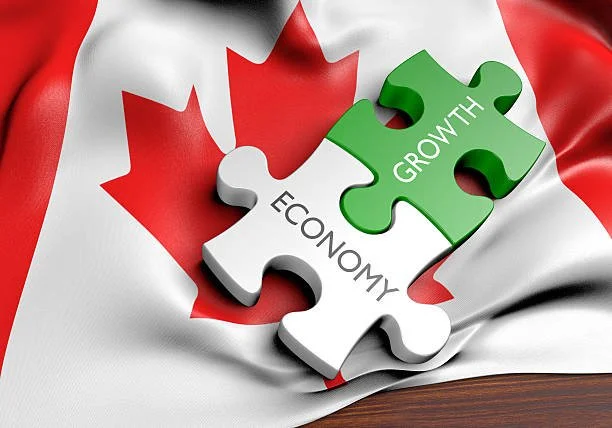
Canada announced a new “Productivity Mega Deduction” this last month that will allow businesses to immediately write off the cost of a much broader range of new investments. The change is designed to encourage businesses to invest in things like machinery, technology, software and other capital assets, rather than spreading the tax deduction over several years. The government estimates that this will reduce Canada’s marginal effective tax rate on new business investment from 13% to 6.4%, compared with 16.9% in the U.S.
For business owners, the important part isn't necessarily the headline tax rate, but what it means when deciding whether to make an investment. Being able to deduct the full cost of an eligible investment in the year it becomes available for use can improve the after-tax economics of buying equipment, technology or other productive assets. The measure is proposed to apply permanently to most qualifying property acquired on or after September 15, 2026.
It is also an interesting shift in how Canada is trying to encourage economic growth. Rather than simply lowering corporate tax rates, the focus is increasingly on making it more attractive for businesses to invest and expand. For incorporated professionals and business owners, this is something worth discussing before making larger capital purchases, as the timing and type of investment can now have a meaningful impact on the tax outcome.
The Hidden Tax Bill in Your RRSP
Source: Adobe Stock
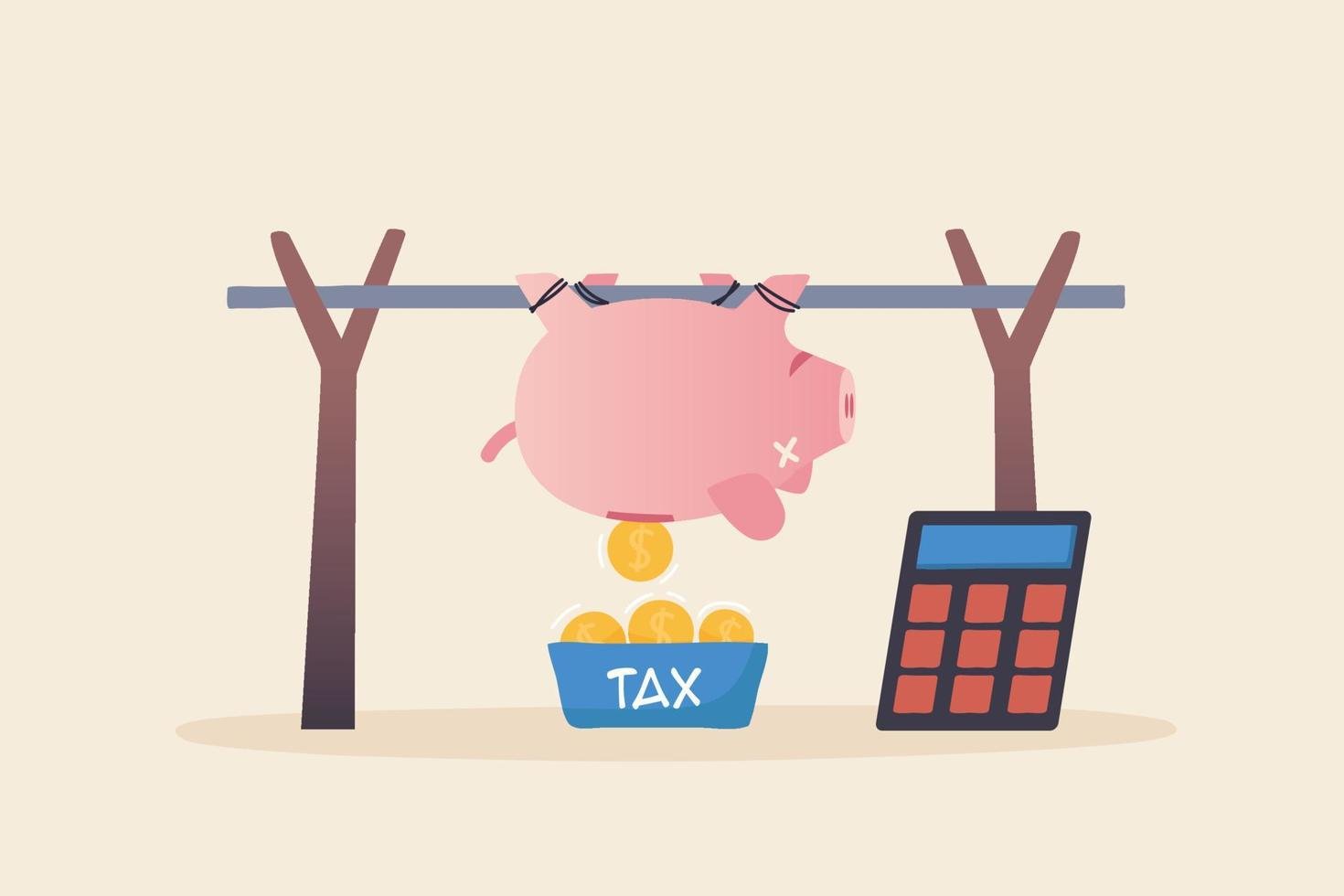
One of the reasons RRSPs are such a valuable retirement tool is also one of the things that can be easy to overlook: the tax hasn't disappeared, it has simply been deferred. Contributions receive a tax deduction today, but withdrawals are eventually fully taxable as income. Once an RRSP is converted to a RRIF, minimum withdrawals are also required each year.
This becomes particularly important when you have accumulated a significant RRSP and enter retirement. RRIF income is added to CPP, OAS and other sources of income, which can push you into a higher tax bracket. It can also affect government benefits — for example, OAS begins to be clawed back once income exceeds the applicable threshold.
This is why we think retirement planning should look beyond simply asking, “How much do I have saved?” The other question is how and when should I draw it down? In some cases, taking money out of an RRSP earlier, while income is lower, can reduce the overall tax bill and create a more predictable retirement income stream. The best strategy will depend on each person's circumstances, but the key is to plan for the tax on the way out, not just the tax savings on the way in.
When Markets Look Expensive — and Why That May Not Matter as Much as You Think
At a recent investment conference, we had the opportunity to hear from Brian Belski, Chief Investment Strategist at Humulis. One of the more interesting points from his presentation was his view that valuation is one of the least reliable predictors of short-term market performance. His argument was that investors can spend a lot of time debating whether the market is expensive, but ultimately earnings and the fundamentals of the companies themselves tend to be much more important in determining where stocks go.
That got us thinking about how often investors are given a reason to be cautious. Today, questions are being raised about the valuation of the S&P 500. A few years ago, the focus was on interest rates, inflation and the recession everyone seemed to be expecting. There is always something to worry about, whether it is geopolitics, the economy or whether artificial intelligence has created another technology bubble. These are all legitimate things to pay attention to, but the challenge is that they don't necessarily tell us what markets will do next. In fact, markets can continue to rise even when the headlines remain negative, as investors ultimately care about whether companies are continuing to grow their earnings.
Belski also made an interesting distinction between forward valuations and actual business performance. Forward earnings estimates are, by definition, someone's prediction of what will happen. And as we have seen many times, those estimates can change considerably. Looking at what companies earned, how quickly those earnings are growing, their return on capital, balance sheets and cash flow can provide a much more grounded way of assessing a business.
This doesn't mean valuation doesn't matter. It absolutely does — particularly over longer periods of five or ten years. But it is a very different thing to say that a market is expensive today than to say that stocks are likely to fall tomorrow. We think this distinction is important when managing portfolios. Rather than making large changes every time the market reaches a new valuation level or a new macroeconomic concern emerges, we would rather focus on the underlying businesses we own, their earnings and cash flows, and whether the price we are paying makes sense relative to the quality and growth of those businesses.
The other point that came through clearly in the presentation was the importance of conviction and diversification at the same time. Those two ideas can sometimes seem contradictory, but they don't have to be. You can have strong views on the companies you own without allowing any single investment to determine the outcome of the entire portfolio. For us, that means having enough diversification to manage risk while still owning investments in meaningful enough weights (as a %) to contribute to returns.
There will always be a reason to question the market. Sometimes those concerns will be right, and eventually there will be another significant market drop. The challenge is that we don't know when it will happen or what will cause it. In the meantime, we think the better question is not “Is the market expensive?”, but “Are the businesses we own continuing to produce the earnings and cash flow that justify their valuations?” That is a much harder question to answer, but it is also one that we believe is far more useful to investors.
One More Year
One of the most common things we hear when talking to someone approaching retirement is, “I think I'll work one more year.” Sometimes that makes perfect financial sense. Other times, one year becomes two, then three, and eventually retirement starts to feel like something that is always just a little further down the road. We were reminded of this recently when one of our colleagues retired. Even though he had spent years preparing financially for retirement, he told us that actually making the transition was more daunting than he expected. There is a big psychological difference between earning a regular income and suddenly having your portfolio become the primary source of your income.
For many people, work provides much more than a paycheque. It provides structure, purpose, social interaction and a sense of security. When you are working, you know another paycheque is coming in a few weeks. In retirement, that changes. You are no longer building the portfolio — you are relying on it to help fund your life. Even when the numbers say you are in a good position, it can take some time to become comfortable with that transition.
That is why we think retirement planning should involve more than simply figuring out whether you have enough money. An equally important question is: What are you actually going to do with all that time? Maybe it's travelling more, spending time with family, playing golf, volunteering, pursuing a hobby, exercising, or even working part-time because you enjoy it. Having a plan for how you want to spend your time can make the transition much easier.
Ultimately, retirement isn't really about stopping work. It's about having the financial freedom to decide how you want to spend your time. Sometimes that means retiring completely, and sometimes it means working a little longer because you enjoy what you do. The goal of planning isn't to tell you when to retire — it's to make sure that when you decide you're ready, your finances aren't the thing holding you back.
Personal and Office Updates:
Over the last few years, Tracy has traveled back to Manitoba and Saskatchewan in the summer to visit family and celebrate the birthday of her Aunt Cassie, who this year turned 101! Cassie was born here in Saskatchewan, after her parents moved here from a small town in Poland before the first world war. Today that town is part of the Ukraine. She and her husband farmed for a while but has been in Moose Jaw longer than Tracy can remember.

Photo Taken by Tracy Tychynski - Saskatchewan, Canada. Remnants of a town near Tracy’s families old farm.
Jack and Julie moved into a new house in November, which has a dedicated workshop and Jack has been busy with upgrades ever since. A wine cellar has been installed and the current project is building a pergola on top of the workshop. But it has not been all work. April saw them travel to France, spending several days walking around Paris, visiting famous landmarks including the recently reopened Notre Dame cathedral, the Eiffel Tower and the Louvre. Next was a river boat cruise down the Rhône river from Lyon to Avignon with side trips to wineries, olive farms and iconic towns.

Photo Taken by Jack Fournier - Lyon, France
Travis and Kristen traveled to Japan this spring. It was a great chance to experience a part of the world very different from what we’re used to in Vancouver. The food was a highlight, but what really stood out was how polite, hardworking, and helpful Japanese people are. We loved experiencing the country’s rich history, architecture, culture, and the bullet trains/public transit made getting around incredibly easy. We came home with some great memories, lots of photos, and a new appreciation for Japan.

Photo Taken by Travis Kidson - Toyko, Japan
Our offices are unique within iA Private Wealth in that several different advisory teams share a floor of a building. The group has been in this space since June of 2005 and we renewed the lease last year. Thus, it was also time to update the floor, which has been repainted and four scenes of Vancouver have been transferred to wallpaper. The elevator lobby re-tiled and rock walls have been placed into our reception area and boardroom. A media room is being installed, which will provide a better place (and lighting) for us to record our portfolio update videos! If you are coming downtown, let us know and stop in for a visit and a coffee.
As always, if you have any questions please don’t hesitate to reach out.
Travis Kidson, BSc, CFP®, CIM®
Portfolio Manager | iA Private Wealth
Insurance Advisor* | iA Private Wealth Insurance Agency
700-609 Granville St. Vancouver, BC
p: 604 895 3486
travis@beaconwealthpartners.ca
Jack Fournier, BSc, FMA, CIM®
Portfolio Manager | iA Private Wealth
Insurance Advisor* | iA Private Wealth Insurance Agency
700-609 Granville St. Vancouver, BC
p: 604 895 3348
jack@beaconwealthpartners.ca
This information has been prepared by Travis Kidson and Jack Fournier who are Portfolio Managers for iA Private Wealth Inc. and does not necessarily reflect the opinion of iA Private Wealth. The information contained in this newsletter comes from sources we believe reliable, but we cannot guarantee its accuracy or reliability. The opinions expressed are based on an analysis and interpretation dating from the date of publication and are subject to change without notice. Furthermore, they do not constitute an offer or solicitation to buy or sell any of the securities mentioned. The information contained herein may not apply to all types of investors. The Portfolio Managers can open accounts only in the provinces in which they are registered.
iA Private Wealth Inc. is a member o the Canadian Investor Protection Fund and the Canadian Investment Regulatory Organization. iA Private Wealth is a trademark and business name under which iA Private Wealth Inc. operates.
*Insurance products are provided through iA Private Wealth Insurance Agency which is a trade name of PPI Management Inc. Only products and services offered through iA Private Wealth Inc. are covered by the Canadian Investors Protection Fund.
Beacon Wealth Partners is a personal trade name of Jack Fournier and Travis Kidson.